Best Barbell for Home Gym 2026: 5 Bars Worth Your Money
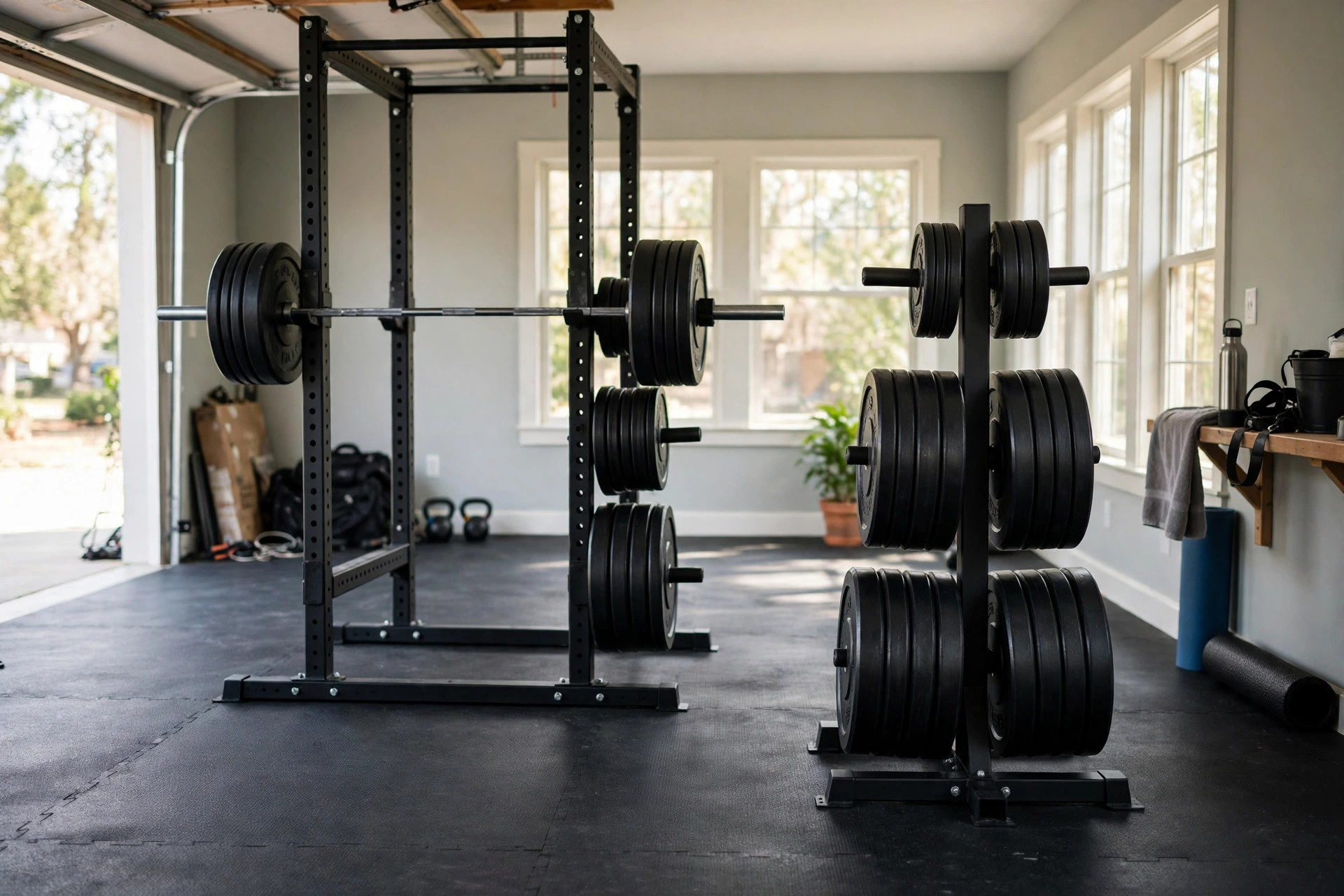
A barbell is the one piece of home gym equipment you should buy once and never replace: a good 20 kg bar handles squats, bench, deadlifts, rows, and presses for decades, while a cheap one bends, rusts, or spins badly within a year. The five below are Olympic-spec bars with 2-inch sleeves and a lifetime or limited-lifetime warranty.
Every figure below was checked against maker listings and 2026 roundups in November 2026. Where sources disagreed — common on price and on Titan’s diameter — we say so here.
Quick picks
- Best all-purpose: Rogue Ohio Bar — 28.5 mm, 190,000 PSI, dual knurl marks, bronze bushings. $295–$375 by finish.
- Best for powerlifting: Rogue Ohio Power Bar — stiff 29 mm shaft, 205,000 PSI, center knurl, IPF-approved. $285–$465 by finish.
- Best value: REP Fitness Colorado Bar — same 28.5 mm / 190,000 PSI class as the Ohio Bar, free shipping. $300–$330.
- Best for Olympic lifts: Bells of Steel Olympic Weightlifting Barbell 2.0 — 28 mm, needle bearings, up to 240,000 PSI. $320.99–$329.99.
- Best budget: Titan Fitness Olympic Bar — real 20 kg bar, 165,000 PSI, bronze bushings, about half the price of a Rogue. $120–$160.
Comparison table
| Bar | Shaft | Tensile strength | Spin | Center knurl | Price |
|---|---|---|---|---|---|
| Rogue Ohio Bar | 28.5 mm | 190,000 PSI* | Bronze bushings | No | $295–$375 |
| Rogue Ohio Power Bar | 29 mm | 205,000 PSI† | Bronze bushings | Yes | $285–$465 |
| REP Colorado Bar | 28.5 mm | 190,000 PSI | Composite bushings | No | $300–$330 |
| Bells of Steel 2.0 | 28 mm | 240,000 PSI&daggerdbl; | Needle bearings | No | $320.99–$329.99 |
| Titan Olympic Bar | 28.5 mm§ | 165,000 PSI | Bronze bushings | No | $120–$160 |
Figures from maker listings and 2026 roundups, November 2026. *Ohio Bar stainless is 200,000 PSI. †Ohio Power Bar stainless is 200,000 PSI. ‡Bells of Steel Cerakote is 190,000 PSI. §Some Titan listings say 28 mm — confirm the variant. Prices vary by finish and seller.
How to choose
1. Diameter decides what the bar is for
Three numbers cover almost every home bar: 28 mm for Olympic lifting (more whip), 29 mm for powerlifting (stiffer under a heavy squat), and 28.5 mm in the middle for lifters who do a bit of everything. That is why the Ohio Bar and the Colorado Bar — both 28.5 mm — are the default picks here. Buy 29 mm only if your training is mostly squat, bench, and deadlift; buy 28 mm only if cleans and snatches are a regular part of your week.
2. Tensile strength is a floor, not a score
Tensile strength is how much stress the steel takes before it permanently bends. For a bar you will keep, 190,000 PSI is the modern baseline — both Rogue flagships and the REP Colorado sit there, and the Bells of Steel chrome bar reaches 240,000 PSI. The Titan’s 165,000 PSI is lower but still real barbell steel, and the reason it costs half as much. Below about 150,000 PSI you are in bend-over-time territory.
3. Bushings vs. bearings: pick by your lifts, not by prestige
Sleeves spin so the plates do not twist your wrists on the turnover. Bronze or composite bushings spin smoothly and quietly, last for years with almost no maintenance, and suit squats, bench, and deadlifts — four of the five bars here. Needle bearings spin faster and freer, which matters for the snatch and clean-and-jerk, where the bar turns in your hands; that is why the Bells of Steel 2.0 is the Olympic-lifting pick. If you do not Olympic-lift, bushings are the better buy.
4. Knurl and finish decide how the bar feels in your hands — and in your garage
Knurl is the crosshatch cut into the shaft. A center knurl grips your back on squats but scrapes your neck on cleans, so multipurpose bars skip it and power bars keep it. Aggressive knurl holds a heavy deadlift but tears skin on high-rep work; the medium knurl on the Ohio Bar, Colorado Bar, and Bells of Steel 2.0 is the compromise most home lifters want. Finish is about rust: bare steel feels best and rusts fastest, while stainless steel or Cerakote cost more but shrug off a humid garage. If your gym is damp, pay for stainless or Cerakote; if it is dry, black zinc or chrome is fine.
Full reviews
Rogue Ohio Bar
The Ohio Bar is the default home-gym barbell for a reason: a 28.5 mm shaft between the Olympic and powerlifting standards, dual knurl marks for both styles, and a medium knurl that holds without shredding your palms on high-rep sets. It is machined and assembled in Columbus, Ohio, from American steel, with a lifetime warranty against bending.
The limits are price and availability. Rogue sells direct only, and the price climbs with the finish: bare steel and black zinc start around $295–$325, Cerakote from about $350, stainless steel around $425, per June–October 2026 listings.
- 28.5 mm do-everything shaft — squats, presses, cleans, deadlifts
- Dual knurl marks, no center knurl to scrape your neck
- Lifetime warranty; stainless version rated F100-R
- Stainless finish costs ~$425, well above the base price
- Sold direct from Rogue only — no retailer discounts
If you buy one barbell and never think about it again, buy this one.
Prices change frequently — the button checks the live price.
Rogue Ohio Power Bar
The Ohio Power Bar is the bar other power bars get measured against. Its stiff 29 mm shaft barely flexes under a heavy squat, the deep power knurl and center knurl keep the bar planted on your back, and the 20 kg version is IPF-approved for sanctioned meets. Like the Ohio Bar it is made in Columbus, Ohio, with a lifetime warranty against bending.
The trade-off is specialization: powerlifting-only marks, a stiff shaft with almost no whip, and a center knurl make it a poor choice for cleans and snatches. Price spans roughly $285–$465 by finish in October 2026 roundups, stainless higher. If your training is mostly squat, bench, and deadlift, this is the right tool; if you mix in Olympic lifts, buy the Ohio Bar instead.
- Stiff 29 mm shaft — minimal flex under heavy squats
- Deep power knurl plus center knurl for a locked-in squat
- IPF-approved 20 kg version; lifetime warranty
- Center knurl scrapes on cleans — not an Olympic-lifting bar
- Almost no whip; wrong tool for snatches
The powerlifter’s bar — buy it if your program is squat, bench, deadlift, repeat.
Prices change frequently — the button checks the live price.
REP Fitness Colorado Bar
The Colorado Bar is REP’s answer to the Ohio Bar, and on paper it is nearly the same bar: the same 28.5 mm shaft, 190,000 PSI steel, dual knurl marks, and lifetime warranty — for roughly $300–$330, hard chrome $319 and Cerakote $329 in Garage Gym Reviews’ 2026 pricing. REP rates it for a 1,500-lb static load, and its composite bushings are quieter than bronze when plates are dropped.
Two caveats. The volcano-style knurl is more passive than the Ohio Bar’s — beginners love it, but advanced lifters pulling heavy may want more bite. With no needle bearings, sleeve spin is only decent for Olympic lifts. REP also ships free, which closes most of the price gap once freight is counted.
- Ohio Bar-class specs for $300–$330, free shipping
- Quiet composite bushings; 1,500-lb static rating
- Lifetime warranty; hard chrome or Cerakote finishes
- Passive knurl can feel slick on heavy pulls
- No needle bearings — limited spin for Olympic lifts
Ninety percent of the Ohio Bar for most of the money — the value pick if you like REP’s ecosystem.
Prices change frequently — the button checks the live price.
Bells of Steel Olympic Weightlifting Barbell 2.0
If cleans and snatches are a regular part of your training, this is the cheapest proper way in. The 28 mm shaft has the whip an Olympic bar needs, needle bearings give the fast, smooth spin that lets the bar turn in your hands, and the chrome version’s 240,000 PSI is the highest on this list — with a 1,543-lb max capacity (1,500 lb for Cerakote). At $320.99 in hardened chrome or $329.99 in black Cerakote, it undercuts every other needle-bearing bar we found.
The same spin is the drawback for powerlifters: bearings can feel too free under a heavy squat or bench, where you want the sleeves to stay put. The medium knurl is also a compromise — secure enough for most, but not as aggressive as a dedicated power bar. Buy this bar for the platform.
- Needle bearings — the fastest sleeve spin here
- 240,000 PSI chrome shaft; 1,543-lb capacity
- Cheapest proper Olympic-lifting bar we found
- Bearings can feel too loose for heavy powerlifting
- Medium knurl — less bite than a power bar
The Olympic-lifting pick — best if your week includes snatches and clean-and-jerks.
Prices change frequently — the button checks the live price.
Titan Fitness Olympic Bar
The Titan is the budget bridge: a real 20 kg Olympic bar with 2-inch sleeves, bronze bushings, and 165,000 PSI steel for roughly half the price of a Rogue. At $120–$160 in 2026 roundups — the Performance Series listing runs about $150, one November 2026 check recorded $177.99 on Amazon — it is the cheapest bar here that still behaves like a barbell.
The ceiling is real, though: at 165,000 PSI it is the weakest steel here, and the 700-lb working capacity is the lowest — not the bar for a 400-lb squatter. Fit and finish are a step down, too: listings disagree on shaft diameter (28 mm vs. 28.5 mm), so confirm the variant. Treat it as a starter bar you may outgrow — if you lift heavy, spend the extra $150 on the REP Colorado.
- About half the price of a Rogue for a real 20 kg bar
- Bronze bushings and 2-inch sleeves — standard plates fit
- Fine for beginners and general strength work
- 165,000 PSI — weakest steel here; lowest capacity
- Listings disagree on shaft diameter (28 vs. 28.5 mm)
The starter bar — best if you want to start lifting now and upgrade later.
Prices change frequently — the button checks the live price.
*Titan listings disagree on diameter (28 vs. 28.5 mm). †700-lb working capacity per one 2026 roundup.
Frequently asked questions
What size barbell should I buy for a home gym?
A 20 kg (44 lb) men’s Olympic bar, 86–87 inches long with 2-inch sleeves — all five bars on this list. It fits standard Olympic plates, racks, and collars. The 15 kg women’s bar (25 mm shaft, about 79 inches) suits smaller hands and lighter lifters. Avoid 1-inch standard bars: their plates do not fit Olympic equipment.
Is a 29 mm power bar or a 28.5 mm multipurpose bar better?
It depends on your program. A 29 mm power bar (Rogue Ohio Power Bar) is stiffer, with a center knurl and aggressive knurl — best for squat, bench, and deadlift, and required if you compete in powerlifting. A 28.5 mm multipurpose bar (Ohio Bar, Colorado Bar) handles every lift competently, including cleans, and is the better single-bar choice.
How much should I spend on a barbell?
For a bar you will keep for years, $300–$375 covers the best options — the Rogue Ohio Bar and REP Colorado Bar both sit there. A $120–$160 Titan is honest value if you are just starting out, and a $285–$465 Rogue Ohio Power Bar is worth it if you compete or lift heavy. Below about $100, you are buying a bar that may bend under load.
Do I need collars, and what else goes with a barbell?
Yes — always lift with collars on, even at light weights: a plate sliding off mid-set is how bars tip and floors get dented. Beyond the bar you need plates (bumper plates if you drop them, iron if you do not), a rack rated for your weights, and a flat rubber mat to protect the floor.
How do I keep a barbell from rusting?
Brush the chalk out of the knurl with a nylon brush after each session, wipe the shaft down, and keep the bar off a damp floor. In a humid garage, stainless steel or Cerakote resists rust far better than bare steel or zinc. A light coat of 3-in-1 oil on the shaft every few months is the standard routine for non-stainless bars.